

HCPCS Level II · Gauze, impregnated
A6223: impregnated gauze without border, pad more than 16 up to 48 sq. in.
A sterile gauze dressing impregnated with something other than water, normal saline or hydrogel, without an adhesive border, pad more than 16 up to 48 sq. in., billed per dressing.
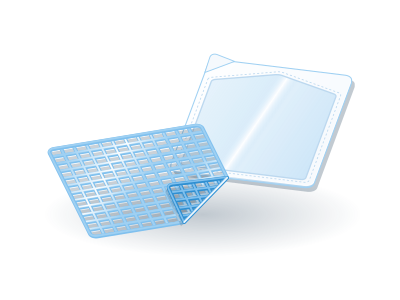 Illustration, not the exact product
At a glance
- Billing unit
- Each (per dressing)
- Size band
- Pad more than 16 up to 48 sq. in.
- Adhesive border
- Without an adhesive border
- PCSS products
- 2 lines, 2 sizes
Official CMS descriptor
How CMS describes A6223
“Gauze, impregnated with other than water, normal saline, or hydrogel, sterile, pad size more than 16 sq. in., but less than or equal to 48 sq. in., without adhesive border, each dressing”
- Code
- A6223
- Short descriptor
- Gauze >16<=48 no w/sal w/o b
- Code added
- January 1, 1997
- Action effective date
- January 1, 2009
- Status in this file
- Active (no termination date)
PCSS products
What PCSS carries under A6223
PCSS suggests A6223 as the typical HCPCS category for these product sizes.
Bismuth petrolatum gauze
Non-adherent & impregnated gauze
Size PCSS suggests A6223 for
- 5×9
Petrolatum dressing
Non-adherent & impregnated gauze
Size PCSS suggests A6223 for
- 3×9
PCSS's suggested HCPCS categories (July 2026) are for reference only, based on product type and pad size. It's a reference, not a coding determination. Confirm final coding with your billing staff.
General product information, not clinical advice.
Size band
Pad size sets the band
CMS splits this dressing type into 3 bands: pad 16 sq. in. or less, pad more than 16 up to 48 sq. in. and pad more than 48 sq. in. Multiply the pad's length by its width: a 6×6 in. pad is 36 sq. in., which falls in A6223's band (more than 16 up to 48 sq. in.).
Usual change frequency (LCD L33831)
- Non-adherent & impregnated gauze
- Up to once per day.
Listed for the PCSS product group, in PCSS's plain-words summary of the LCD.
LCD L33831(opens in a new tab)Medicare notes for A6223
PCSS has no code-specific Medicare notes for A6223. The documentation checklist covers what dressing orders and notes need to show.
Medicare details checked against CMS sources on October 6, 2026. Not billing, coding or legal advice.
Related codes
Gauze, impregnated: other codes
Codes PCSS carries open their own page; the rest open in the full lookup.
Questions
A6223: common questions
Answers draw on the CMS descriptor, PCSS's suggested codes and the Medicare notes on this page.
What is HCPCS code A6223?
A6223 is a Level II HCPCS code. Its CMS long descriptor reads “Gauze, impregnated with other than water, normal saline, or hydrogel, sterile, pad size more than 16 sq. in., but less than or equal to 48 sq. in., without adhesive border, each dressing”, and its short descriptor is “Gauze >16<=48 no w/sal w/o b” (October 2026 Alpha-Numeric HCPCS File, CMS).
What does PCSS suggest A6223 for?
PCSS suggests A6223 as the typical HCPCS category for Bismuth petrolatum gauze (5×9); Petrolatum dressing (3×9). PCSS's suggested HCPCS categories (July 2026) are for reference only, based on product type and pad size. Confirm final coding with your billing staff.
How often are non-adherent & impregnated gauze usually changed under Medicare?
Under LCD L33831, the usual change frequency for non-adherent & impregnated gauze: Up to once per day.
What size range does A6223 cover?
A6223 covers a pad of more than 16 up to 48 sq. in. In the same series, A6222 covers a pad of 16 sq. in. or less and A6224 covers a pad of more than 48 sq. in.
Wholesale portal
Wholesale pricing and stock orders.
Sign in to view wholesale pricing and order supplies for your practice. New customers create an account and sign the Net-30 agreement online; Aubrey countersigns to open ordering.
Help: (803) 422-2710Your practice’s wholesale account
View your catalog pricing, save business and ship-to details, and order once Aubrey has countersigned your agreement. Patient-direct orders follow the separate Equipia route described in How to order.
How to order